
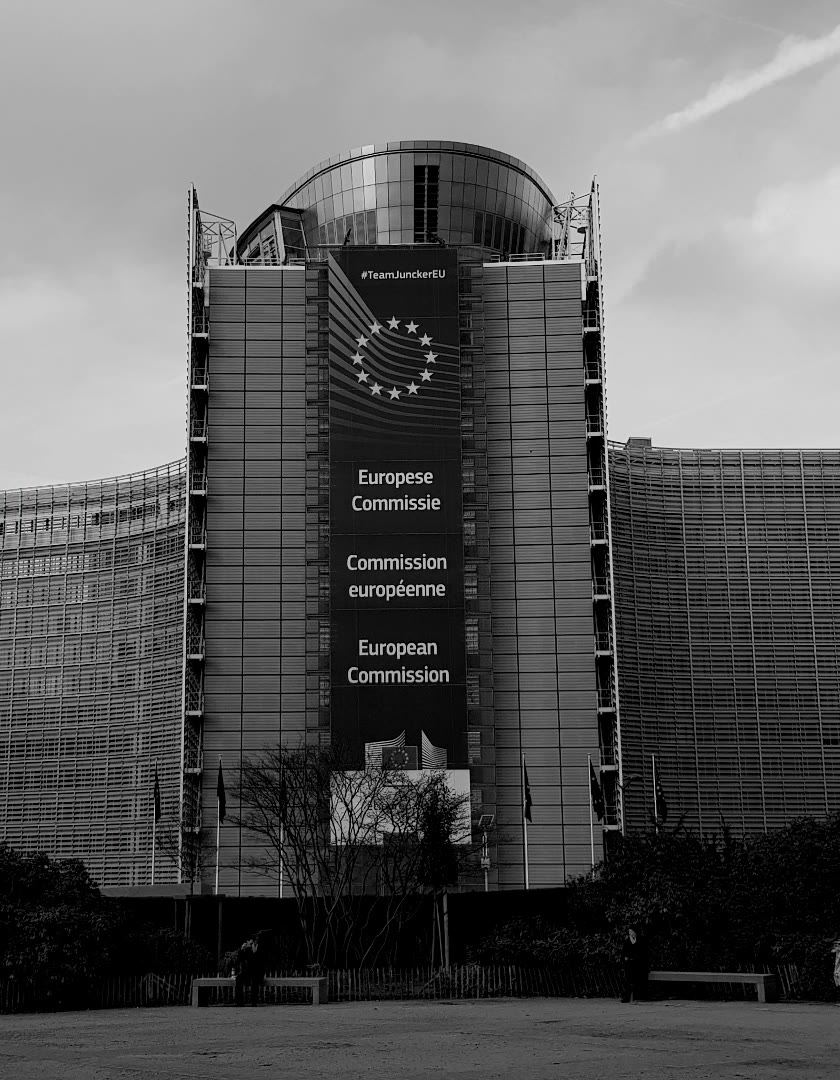
Sovereignty and freedom begin with the ability of citizens to decide who governs them and what policies their governments pursue. Europe needs strong national democracies, genuinely competitive elections, and the confidence to trust citizens to make political choices without being managed, corrected or protected from their own decisions.
Across Europe, the basic principle of democratic self-government is coming under growing pressure. Elections still take place, votes are counted, and governments change. Yet surrounding these formal processes is an expanding architecture designed to influence the conditions under which political choices are made. EU financial conditionality, judicial intervention, digital regulation, 'anti-disinformation' mechanisms, EU-funded NGO networks, and pressure from European institutions increasingly shape national political environments before voters enter the polling booth.
The justification is almost always the defence of democracy itself. Citizens are portrayed as vulnerable to ‘disinformation’, ‘foreign interference’, ‘hate speech’, ‘polarisation’ and ‘populism’. Elections become ‘systemic risks’ to be managed; political speech becomes a security concern; and disagreements with the direction of the European Union are treated not simply as legitimate political differences, but as potential threats to ‘EU values’. Behind this lies a profound mistrust of the European citizen: the assumption that voters cannot distinguish truth from falsehood or make political choices without technocratic protection.
The so-called ‘European Democracy Shield’ is the clearest expression of this development. It seeks to strengthen EU involvement in the information environment surrounding elections, bringing together platform regulation, fact-checkers, ‘trusted flaggers’, 'civil-society organisations', and 'anti-disinformation' initiatives to identify and respond to perceived threats before and during campaigns. Rather than leaving elections to national democratic institutions, this model gives EU institutions and EU-supported networks an increasingly active role in monitoring political information, identifying supposedly harmful narratives, and coordinating responses. An EU mechanism presented as a ‘shield for democracy’ is thus becoming a shield against democracy itself, protecting the political system from the unpredictability of democratic choice.
A transformation in the EU’s understanding of its own role is driving this development. The EU was built upon member states with distinct political traditions, institutions and electorates. Increasingly, however, Brussels sees national democracy as something to be supervised and augmented from above. Its regulatory power now extends into political communication; EU funding creates leverage over governments; European institutions openly pass judgement on national political developments; and a growing ecosystem of NGOs, 'fact-checkers' and digital platforms is incorporated into the EU governance of the politically allowed.
This is particularly dangerous because individual interventions can appear limited or technical. A funding decision, platform guideline, fact-checking network, or European Parliament resolution may not determine an election alone. Taken together, however, these instruments create an integrated system capable of placing national democratic politics under permanent external, EU pressure. Electoral sovereignty can remain formally intact while being progressively hollowed out in practice.
The answer cannot be another layer of technocratic safeguards. Europe does not suffer from too much democracy, but from too little confidence in it. The starting point must be the sovereign citizen: an adult capable of evaluating competing arguments, encountering false information, rejecting propaganda, and making electoral choices without officials deciding which information environment is appropriate. Democracy necessarily involves risk. Once institutions acquire the power to manage political debate to produce supposedly safer outcomes, the distinction between protecting democracy and managing it begins to disappear.
FSI Europe is committed to making the defence of democratic sovereignty central to the European debate. We will investigate how EU institutions, regulation, funding and affiliated networks influence national political processes; document interventions in elections and political debate; and expose structures through which power is exercised without direct democratic accountability. At the same time, we will make the positive case for sovereign citizenship: a Europe in which political disagreement is legitimate, national democracies can make different choices, and citizens—not technocrats—have the final word over their political future.
01 / Reading list
Featured material
The Managed Ballot: The EU’s Playbook for Shaping National Elections
The report maps a claimed system of election influence operating through financial conditionality, digital regulation, political pressure and foreign-funded civil-society networks, using Romania, Poland and Czechia as case studies.
A Shield Against Democracy: How the Democracy Shield Protects the EU from the Electorate
Lewis examines the European Commission’s Democracy Shield and argues that tools presented as protection against foreign interference could also be used to manage political narratives, influence elections and insulate EU institutions from domestic dissent.
Romania’s Elites Have Declared War on Democracy
Reynolds treats the Romanian presidential crisis as a warning about what happens when established parties and institutions respond to an unexpected electoral result with bans, censorship or annulment rather than persuasion.
The Fear of Populism Expresses the Elite’s Disdain for Democracy
Furedi’s essay argues that populism should be understood as democracy in action and defends active citizen participation against a political culture that treats elections as acceptable only when they produce the approved result.
Le Pen is Free to Run — but Democracy is Still in Peril
Reynolds examines the use of legal and institutional mechanisms to constrain France’s populist right, arguing that formal eligibility to stand for election does not by itself guarantee a level political field.
The Rise of “Negative Voting” is a Danger to Democracy
Furedi argues that elections reduced to contests against the “lesser of two evils” prevent citizens from choosing between genuine alternatives and allow status-quo politics to persist.
Democracy Under Siege: Don’t Let Them Lock It Down!
This foundational book argues that democracy is a value rather than merely a mechanism for producing acceptable outcomes, providing a conceptual introduction to the tendency to distrust or contain the electorate.
Hungary’s Jacobin Turn
Schenk argues that Péter Magyar is using his supermajority to deepen rather than restrain Hungary’s concentrated constitutional power.
No facts, no evidence: How EU establishment journalists invent stories on Hungary and Russia
Schenk challenges unverified claims of Russian interference in Hungary and argues that repeated allegations can be used to pre-emptively delegitimise an election.